
AI Tools for Digital Marketing: Revolutionizing How Brands Connect with Audiences
The digital marketing landscape is undergoing a profound transformation, driven by artificial intelligence tools that are redefining what’s possible in customer engagement, content creation, and campaign optimization. As businesses compete for attention in an increasingly crowded digital space, AI tools for digital marketing have evolved from futuristic concepts to essential resources that deliver measurable results and competitive advantages. Whether you’re a solo entrepreneur, marketing professional, or business leader, understanding and leveraging AI tools can dramatically enhance your marketing effectiveness while reducing time and resource investments.
The AI Revolution in Digital Marketing
Artificial intelligence has moved beyond buzzword status to become a practical, accessible technology that marketers of all skill levels can harness. AI tools for digital marketing use machine learning algorithms, natural language processing, computer vision, and predictive analytics to automate tasks, generate insights, and create content that would traditionally require extensive human effort. These tools don’t just save time—they enable new capabilities that were previously impossible, from hyper-personalized customer experiences to real-time campaign optimization across multiple channels.
The adoption of AI in marketing isn’t optional anymore; it’s a necessity for staying competitive. Companies leveraging AI tools report significant improvements in customer engagement rates, conversion optimization, and overall marketing ROI. The democratization of AI technology means that small businesses now have access to capabilities that were once exclusive to enterprises with massive marketing budgets.
Essential AI Tools for Content Creation
AI Writing Assistants
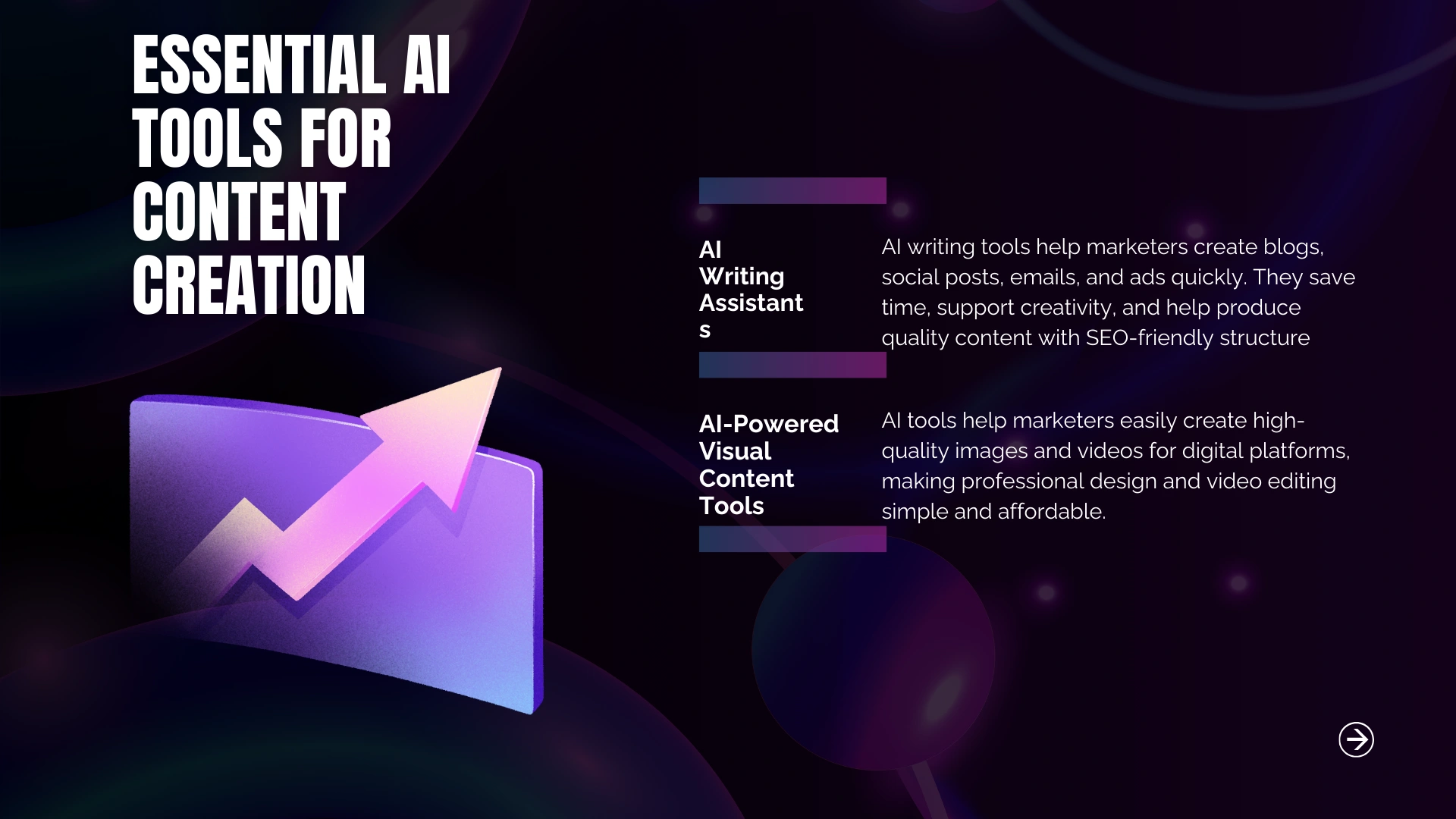
Content creation remains one of the most time-consuming aspects of digital marketing, making AI writing assistants invaluable for modern marketers. Tools like ChatGPT, Jasper, Copy.ai, and Writesonic can generate blog posts, social media captions, email copy, product descriptions, and ad copy in seconds. These AI tools understand context, tone, and marketing objectives, producing content that aligns with brand voice while incorporating SEO best practices.
The sophistication of AI writing tools has reached a point where they can conduct research, structure arguments, and even adapt writing styles for different audiences. Marketers use these tools not to replace human creativity but to overcome writer’s block, generate multiple content variations for A/B testing, and scale content production without sacrificing quality. The key is using AI as a collaborative partner—generating initial drafts that human marketers then refine and personalize.
AI-Powered Visual Content Tools

Visual content drives engagement across digital platforms, and AI tools have revolutionized graphic design and image creation. Canva’s Magic Design, Adobe Firefly, Midjourney, and DALL-E enable marketers to create stunning visuals without professional design skills. These tools generate custom images from text descriptions, remove backgrounds, resize graphics for different platforms, and even suggest design layouts based on content type and industry.
Video content creation has similarly been transformed by AI. Tools like Synthesia create videos with AI avatars, Descript enables easy video editing through text manipulation, and Runway offers advanced video editing capabilities powered by machine learning. These technologies make professional-quality video content accessible to marketers who previously couldn’t afford video production costs.
AI Tools for Social Media Marketinghttps://www.marketermilk.com/blog/ai-marketing-tools
Social media management becomes far more efficient with AI tools for digital marketing. Platforms such as Hootsuite, Buffer, and Sprout Social use AI tools for digital marketing to suggest optimal posting times, recommend trending hashtags, and predict which content formats will perform best with specific audiences. By analyzing historical engagement data, these AI tools for digital marketing deliver actionable insights that help brands improve reach and engagement.
AI-powered social listening is another critical application of AI tools for digital marketing. Tools like Brandwatch and Mention monitor brand mentions, audience sentiment, and emerging trends across social networks. These AI tools for digital marketing help marketers spot engagement opportunities, identify potential PR risks early, and gain competitive intelligence by tracking conversations around competitors.
Chatbots and conversational automation further highlight the value of AI tools for digital marketing in social media. Solutions such as ManyChat and Chatfuel allow businesses to automate replies, qualify leads, and guide users through purchase journeys directly within social messaging apps. These AI tools for digital marketing handle routine inquiries instantly while escalating complex issues to human teams, ensuring fast, reliable customer support at any time.
AI-Enhanced Email Marketing
Email marketing has been supercharged by AI capabilities that personalize messages at scale. Tools like Mailchimp, HubSpot, and ActiveCampaign use AI to optimize send times for individual subscribers, predict which subject lines will drive opens, and segment audiences based on behavior patterns. AI algorithms analyze past campaign performance to recommend content improvements and predict which subscribers are most likely to convert.
Predictive analytics in email marketing identifies subscribers at risk of disengaging, enabling marketers to send targeted re-engagement campaigns before customers churn. AI also powers dynamic content insertion, ensuring each recipient sees personalized product recommendations, images, and offers based on their browsing history and purchase behavior. This level of personalization was once only achievable through extensive manual segmentation; AI makes it automatic and continuous.
SEO and Content Optimization Tools

Search engine optimization has become increasingly complex, making AI tools essential for maintaining competitive search visibility. Surfer SEO, Clearscope, and MarketMuse analyze top-ranking content to provide specific recommendations on keyword usage, content structure, and topic coverage. These tools don’t just identify keywords—they understand semantic relationships and content gaps that humans might overlook.
SEMrush and Ahrefs incorporate AI features that predict ranking difficulty, suggest content opportunities, and identify technical SEO issues automatically. Their algorithms can analyze thousands of data points to prioritize which SEO efforts will yield the highest returns. For local businesses, AI tools like BrightLocal automate review monitoring and local citation management, ensuring consistent business information across directories and platforms.
Advertising and Campaign Optimization
AI has fundamentally changed how digital advertising works across platforms. Google Ads and Facebook Ads use machine learning to optimize bidding strategies, identify high-value audiences, and allocate budgets toward best-performing ad variations automatically. Smart campaigns leverage AI to test different combinations of headlines, descriptions, and images, continuously learning which combinations drive conversions.
Tools like AdCreative.ai generate advertising creatives optimized for performance, using historical data to predict which designs will resonate with target audiences. Programmatic advertising platforms use AI to purchase ad inventory in real-time, placing ads where they’re most likely to reach interested users at optimal costs. This automated approach outperforms manual media buying by processing far more variables than humans can track.
Analytics and Predictive Intelligence
Understanding campaign performance requires processing vast amounts of data—something AI excels at. Google Analytics 4 incorporates machine learning that surfaces insights automatically, predicting future trends and identifying anomalies that warrant attention. Tools like Tableau and Power BI use AI to create data visualizations that highlight significant patterns and relationships within marketing data.
Predictive analytics platforms like Salesforce Einstein and HubSpot’s predictive lead scoring use AI to forecast which leads are most likely to convert, enabling sales teams to prioritize high-potential prospects. These tools analyze hundreds of signals—from website behavior to email engagement—to predict customer lifetime value and churn risk, informing strategic decisions about resource allocation and customer retention efforts.
Customer Relationship Management
AI-enhanced CRM systems have transformed how businesses manage customer relationships. Salesforce, HubSpot, and Zoho CRM incorporate AI features that automate data entry, suggest next best actions for sales representatives, and identify cross-selling opportunities based on customer behavior patterns. These systems learn from successful interactions to recommend proven strategies for engaging specific customer segments.
Conversational AI and chatbots integrated with CRM platforms provide instant customer support while capturing valuable data about customer needs and preferences. This information flows automatically into customer profiles, creating comprehensive views of each customer’s journey without manual data entry. The result is more personalized service and better-informed marketing strategies.
Personalization and Customer Experience
AI enables personalization at a scale previously impossible. Dynamic Yield, Optimizely, and Adobe Target use machine learning to personalize website experiences in real-time, showing different content, product recommendations, and offers based on individual visitor behavior and characteristics. These tools test thousands of variations simultaneously to identify which experiences drive the best outcomes for different audience segments.
Recommendation engines powered by AI analyze purchase patterns and browsing behavior to suggest relevant products, increasing average order values and customer satisfaction. Netflix’s recommendation algorithm is perhaps the most famous example, but similar technologies are now accessible to e-commerce businesses of all sizes through platforms like Nosto and Barilliance.
Implementation Strategies for AI Marketing Tools
Successfully implementing AI tools requires strategic planning rather than random adoption. Start by identifying your biggest marketing challenges and time drains—these are prime candidates for AI solutions. Begin with one or two tools that address critical needs, ensuring your team becomes proficient before expanding your AI toolkit.
Data quality is crucial for AI effectiveness. Before implementing AI tools, audit your data collection practices and clean existing databases. AI algorithms are only as good as the data they learn from, so investing in data hygiene pays dividends in tool performance.
Training is essential—not just on how to use specific tools, but on understanding AI capabilities and limitations. Your team should know when to trust AI recommendations and when human judgment should override algorithmic suggestions. Establish clear processes for reviewing AI-generated content and decisions before they’re published or implemented.
The Future of AI in Digital Marketing
The trajectory of AI tools for digital marketing points toward even greater integration and sophistication. We’re moving toward AI that doesn’t just execute tasks but participates in strategy development, identifying opportunities and recommending comprehensive approaches based on market conditions and business objectives.
Voice and visual search optimization will become increasingly important as AI-powered assistants and image recognition technologies mature. Marketers will need tools that optimize content for these emerging search behaviors. Augmented reality and virtual reality marketing will rely heavily on AI to create personalized immersive experiences at scale.
Ethical considerations around AI use will shape future tool development. Transparency about AI involvement, responsible data usage, and avoiding algorithmic bias will distinguish reputable marketing tools from those that risk customer trust and regulatory compliance.
Choosing the Right AI Tools for Your Business
Choosing the right AI tools for digital marketing can feel overwhelming due to the wide range of options available. To make effective decisions, marketers should evaluate AI tools for digital marketing based on clear criteria: Does the tool solve a specific marketing problem? Does it integrate smoothly with your existing marketing stack? Is the pricing model sustainable? And does it provide reliable support and training resources?
When adopting AI tools for digital marketing, start with free trials to test performance in real-world marketing environments. Ease of use is critical—advanced AI tools for digital marketing that require deep technical expertise may not be practical for small or growing teams. Scalability also matters; the best AI tools for digital marketing should evolve alongside your business rather than needing replacement as your needs expand.
AI tools for digital marketing are no longer optional—they are essential for modern businesses. AI tools for digital marketing enable marketers to create content faster, analyze audiences more accurately, and personalize campaigns at scale. As technology advances, AI tools for digital marketing continue to deliver a strong competitive advantage through smarter optimization and data-driven decision-making.
Success with AI tools for digital marketing depends on selecting the right tools and integrating them effectively. The most successful brands combine AI tools for digital marketing with human creativity and strategic thinking. Today, the real question is not whether to use AI tools for digital marketing, but how quickly you can adopt them to stay ahead.
that makes the impossible possible.
My Blog https://marvasherin.in/