
In an era where the average person spends over six hours daily on the internet, digital marketing has transformed from a novel concept into an indispensable business strategy. The scope of digital marketing extends far beyond simple social media posts or email campaigns—it encompasses a vast ecosystem of strategies, channels, and technologies that connect brands with their audiences in meaningful ways. Whether you’re a business owner, aspiring marketer, or career-switcher, understanding the scope of digital marketing is essential for navigating today’s competitive marketplace.
What is Digital Marketing?
All marketing initiatives that make use of electronic devices or the internet are referred to as digital marketing.Businesses leverage digital channels such as search engines, social media platforms, email, websites, and mobile applications to connect with current and prospective customers. Unlike traditional marketing, digital marketing offers unprecedented precision in targeting, real-time performance tracking, and the ability to adjust campaigns on the fly based on data-driven insights.
The Multifaceted Domains of Digital Marketing
Search Engine Optimization (SEO)
One of the most important aspects of digital marketing is still SEO. This practice involves optimizing your website and content to rank higher in search engine results pages, thereby increasing organic traffic. The scope of SEO includes on-page optimization, technical SEO, link building, and local SEO strategies. As search algorithms become increasingly sophisticated, SEO specialists must stay updated with constant algorithm changes while creating genuinely valuable content that serves user intent.
Content Marketing
Content marketing focuses on creating, publishing, and distributing valuable content to attract and retain a clearly defined audience. This domain spans blog posts, videos, podcasts, infographics, ebooks, whitepapers, and case studies. The scope extends to content strategy, creation, distribution, and performance analysis. Successful content marketers understand storytelling, audience psychology, and how to align content with different stages of the buyer’s journey.
Social Media Marketing
Social media platforms have become powerful marketing channels where brands can engage directly with their audiences. The scope of social media marketing includes organic content creation, community management, influencer partnerships, and paid social advertising across platforms like Facebook, Instagram, LinkedIn, Twitter, TikTok, and emerging networks. Social media marketers must understand platform-specific algorithms, audience behavior patterns, and content formats that drive engagement.
Pay-Per-Click Advertising (PPC)
PPC advertising lets companies put ads on search engines and other sites, and they only pay when people click on those ads. Google Ads, Bing Ads, and social media advertising fall under this category. The scope encompasses keyword research, ad copywriting, bid management, landing page optimization, and campaign analytics. PPC specialists need analytical skills to manage budgets effectively and maximize return on ad spend.
Email Marketinghttps://mailchimp.com/marketing-glossary/email-marketing/
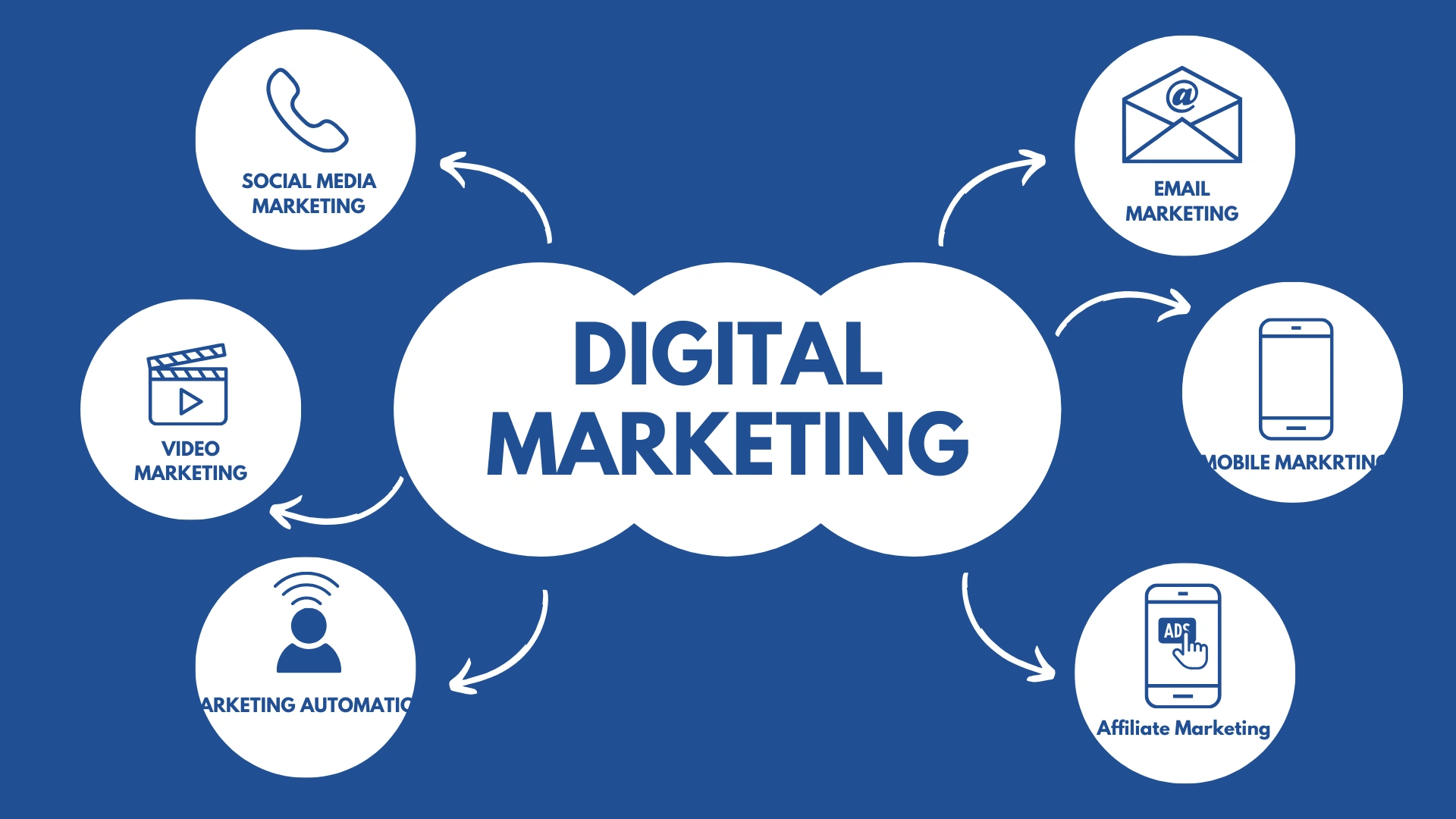
Email marketing still gives great returns on investment (ROI) even though it is one of the oldest digital marketing platforms.. The scope includes list building, segmentation, automation workflows, newsletter creation, personalization strategies, and deliverability optimization. Modern email marketing integrates with customer relationship management systems and uses behavioral triggers to send timely, relevant messages that nurture leads and retain customers.
Affiliate Marketing
Affiliate marketing involves partnering with individuals or companies who promote your products or services in exchange for a commission on sales. The scope includes recruiting affiliates, creating promotional materials, tracking performance, and managing relationships. This performance-based marketing model has expanded significantly with the growth of influencer marketing and content creators.
Mobile Marketing
With mobile devices accounting for more than half of all web traffic, mobile marketing has become essential. The scope encompasses mobile-optimized websites, app-based marketing, SMS campaigns, location-based marketing, and mobile advertising. Marketers must understand mobile user behavior, which differs significantly from desktop browsing patterns.
Video Marketing
Video content has exploded in popularity, with platforms like YouTube, TikTok, and Instagram Reels driving massive engagement. The scope of video marketing includes strategy development, production, optimization for different platforms, YouTube SEO, and video advertising. Marketers who can create compelling video content have a significant advantage in capturing audience attention.
Marketing Automation
Marketing automation platforms enable businesses to streamline, automate, and measure marketing tasks and workflows. The scope includes lead nurturing sequences, behavior-based triggers, customer journey mapping, and integration with sales systems. Automation specialists help businesses scale their marketing efforts while maintaining personalization.
Career Opportunities in Digital Marketing
The scope of digital marketing careers is incredibly diverse and continually expanding. Here are some prominent career paths:
Digital Marketing Specialists develop and execute comprehensive digital strategies across multiple channels. They need a broad understanding of various digital marketing disciplines and the ability to integrate them cohesively.
SEO Specialists focus exclusively on improving organic search visibility. This role requires technical knowledge, analytical skills, and an understanding of how search engines evaluate and rank content.
Content Strategists plan, develop, and manage content that aligns with business goals and audience needs. They bridge the gap between marketing objectives and content creation.
Social Media Managers build and maintain a brand’s social media presence, creating content calendars, engaging with audiences, and analyzing performance metrics.
PPC Managers oversee paid advertising campaigns, managing budgets and optimizing campaigns for maximum ROI. This role demands strong analytical abilities and attention to detail.
Email Marketing Specialists design and implement email campaigns that drive engagement and conversions through strategic messaging and automation.
Analytics Managers interpret data from various digital channels to provide actionable insights that inform marketing strategy. They work with tools like Google Analytics, Adobe Analytics, and various marketing platforms.
The Business Impact of Digital Marketing
The scope of digital marketing’s impact on businesses cannot be overstated. Small startups can compete with established corporations by leveraging targeted digital strategies. E-commerce businesses rely almost entirely on digital channels to attract and convert customers. Even traditional brick-and-mortar businesses use digital marketing to drive foot traffic and build brand awareness.
Digital marketing offers several distinct advantages including measurable results, cost-effectiveness compared to traditional marketing, precise audience targeting, real-time campaign adjustments, and global reach with local precision. These benefits make digital marketing accessible to businesses of all sizes and budgets.
Industry Applications Across Sectors
The scope of digital marketing extends across virtually every industry. Retail and e-commerce businesses use digital channels to showcase products and drive online sales. Healthcare providers leverage digital marketing for patient education and appointment scheduling. Financial services companies build trust through content marketing and use targeted advertising for customer acquisition. Educational institutions attract students through strategic digital campaigns. Real estate agents use social media and virtual tours to showcase properties. The hospitality and tourism industry relies heavily on visual content and review management.
Each industry adapts digital marketing strategies to its unique needs, creating specialized opportunities for marketers with industry-specific knowledge.
Emerging Trends Expanding the Scope
The scope of digital marketing continues to evolve with technological advancement. Artificial intelligence and machine learning are revolutionizing personalization, predictive analytics, and automated content creation. Voice search optimization is becoming crucial as smart speakers gain popularity. Augmented reality and virtual reality are creating immersive brand experiences. Conversational marketing through chatbots and messaging apps is changing customer service. Privacy-focused marketing strategies are emerging in response to data protection regulations.
These trends create new opportunities for marketers willing to embrace innovation and continuous learning.
Essential Skills for Success
To thrive in digital marketing, professionals need a combination of technical and soft skills. Analytical thinking helps interpret data and optimize campaigns. Creativity drives engaging content and innovative strategies. Technical proficiency with various tools and platforms is essential. Communication skills enable effective collaboration and stakeholder management. Adaptability allows marketers to keep pace with rapid industry changes. Strategic thinking connects individual tactics to broader business objectives.
Getting Started in Digital Marketing
For those looking to enter the digital marketing field, the path has never been more accessible. Numerous online courses, certifications, and bootcamps offer training in specific disciplines or comprehensive digital marketing programs. Google, HubSpot, Facebook, and other major platforms offer free certifications that provide foundational knowledge and industry-recognized credentials.
Practical experience is invaluable in digital marketing. Starting a personal blog, managing social media for a local business, or running small advertising campaigns can provide hands-on learning that complements theoretical knowledge. Many successful digital marketers began by experimenting with their own projects before transitioning into professional roles.
The beauty of digital marketing is that it values results over credentials. A strong portfolio demonstrating successful campaigns, measurable improvements, or creative problem-solving often matters more than formal degrees. This meritocratic nature makes digital marketing an attractive field for self-starters and career changers.
The Future Scope of Digital Marketing
Looking ahead, the scope of digital marketing will continue to expand rapidly as new technologies and platforms emerge. The integration of artificial intelligence is transforming the scope of digital marketing by making campaigns more predictive, data-driven, and highly personalized. Marketers are increasingly relying on AI-powered tools for content creation, customer segmentation, and campaign optimization, reshaping how digital marketing strategies are planned and executed.
Privacy and data protection will play a critical role in shaping the future scope of digital marketing. As third-party cookies phase out and global privacy regulations become stricter, marketers must adopt strategies that respect user privacy while still delivering relevant experiences. This shift is expanding the scope of digital marketing toward first-party data collection, contextual advertising, and permission-based marketing models.
The scope of digital marketing is also extending into emerging technologies such as the metaverse and Web3. Brands are already experimenting with virtual environments, NFTs, and blockchain-based loyalty programs to create immersive customer experiences. While these innovations are still evolving, they highlight how the scope of digital marketing is moving beyond traditional channels into entirely new dimensions of engagement and interaction.
Conclusion
The scope of digital marketing is vast, dynamic, and constantly expanding. It covers multiple disciplines, offers diverse career opportunities, and provides businesses with powerful tools to reach, engage, and convert audiences. As technology evolves and consumer behavior shifts, the scope of digital marketing continues to grow in importance and sophistication.
Understanding the scope of digital marketing is essential whether you are building a career or growing a business. The field rewards professionals who embrace continuous learning, adapt to emerging trends, and stay aligned with changing digital behaviors. In today’s experience-driven economy, mastering the scope of digital marketing is no longer optional—it is a necessity.
The opportunities within the scope of digital marketing are limited only by your willingness to learn, experiment, and adapt. As global businesses accelerate digital transformation, skilled digital marketers remain in high demand, shaping how brands connect with audiences in an increasingly digital world.
My Bloghttps://marvasherin.in/